
Design Corps
Beyond the Classroom
Expanding design thinking through campus partnerships.
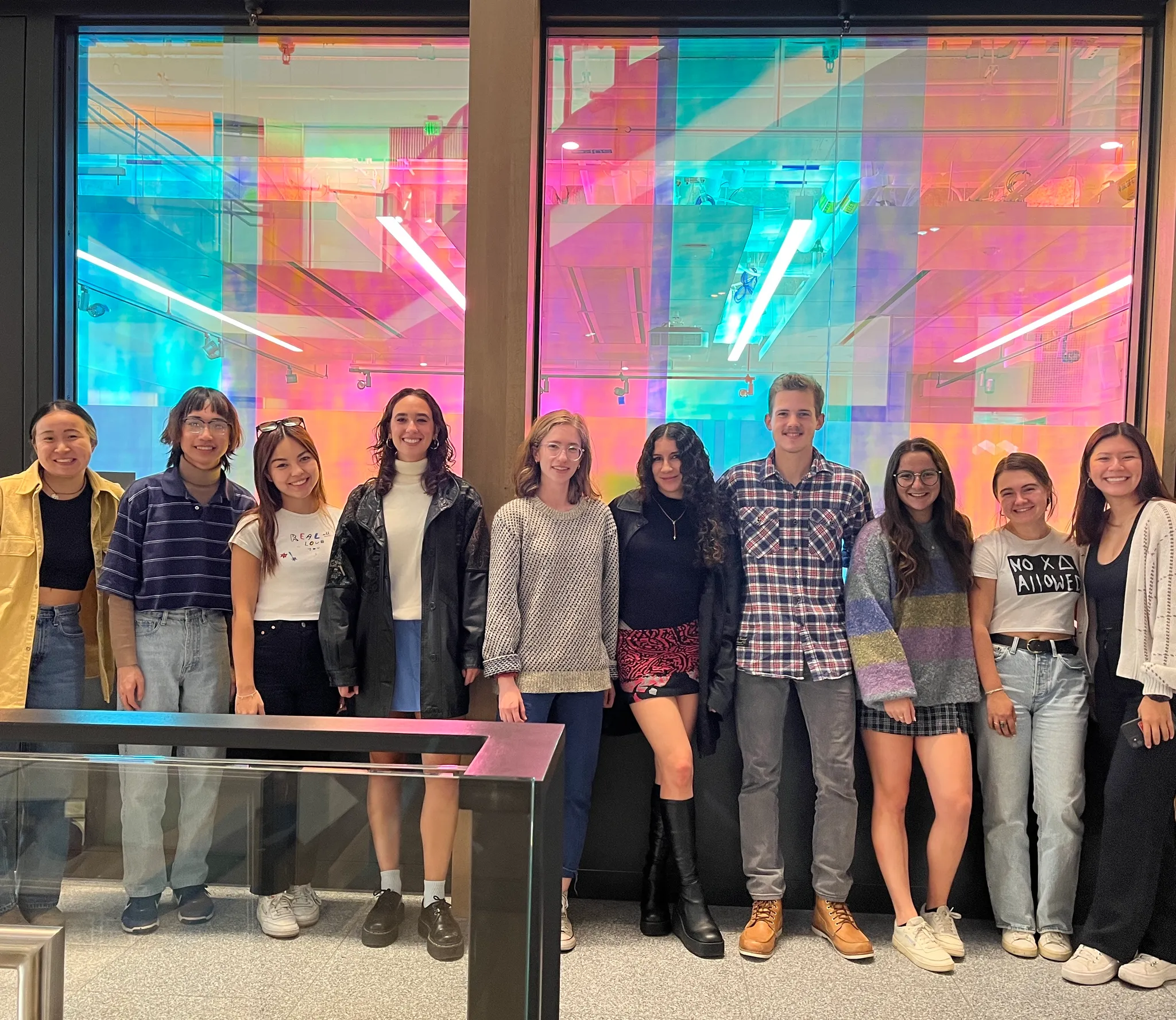
Design Corps team · Design Initiative at Dartmouth
Dartmouth's home for design as a liberal art, where students from every major learn to turn curiosity into things that matter.
Design at Dartmouth began in 1987 with a simple premise: design is a liberal art, and design thinking is most powerful when paired with domain expertise. A human-centered design minor can amplify any major, and Dartmouth’s modifier system—majoring in one field modified by another—means students never leave their discipline to learn design. It becomes part of how they think within it.
Students learn the fundamentals, then combine them with engineering, ethnography, health, AI, ecology, or craft without losing the judgment that makes the work worth doing. Government majors run design sprints. Biology students prototype diagnostic tools. Environmental studies researchers turn data into something a community can act on.
The Design Initiative at Dartmouth grows these combinations deliberately: through the Human-Centered Design Minor Program Committee, our new Collaborative Intelligence Lab (Co-Lab), cross-departmental grants, and the connective tissue between them.
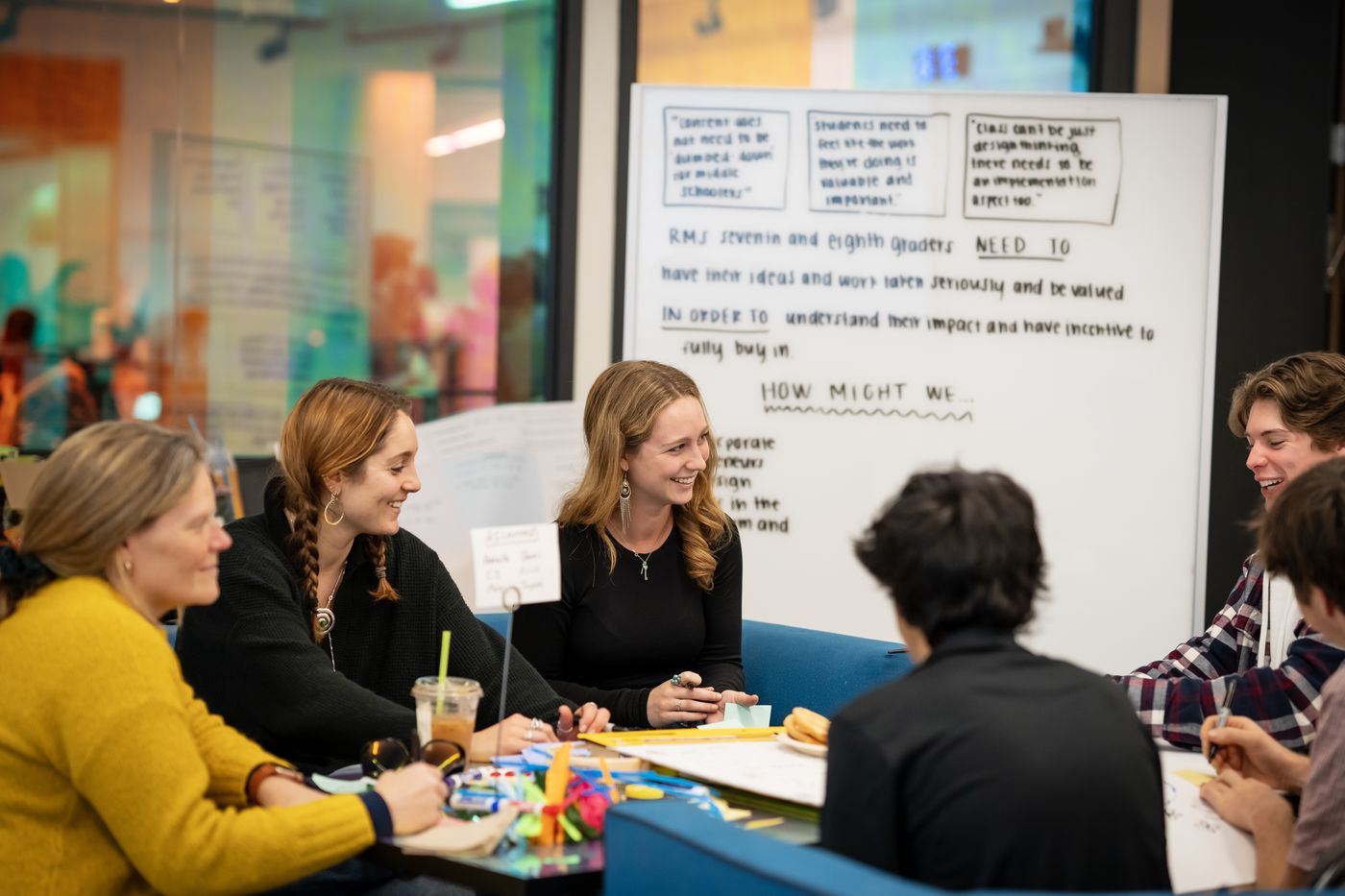 Photo: Mark Washburn
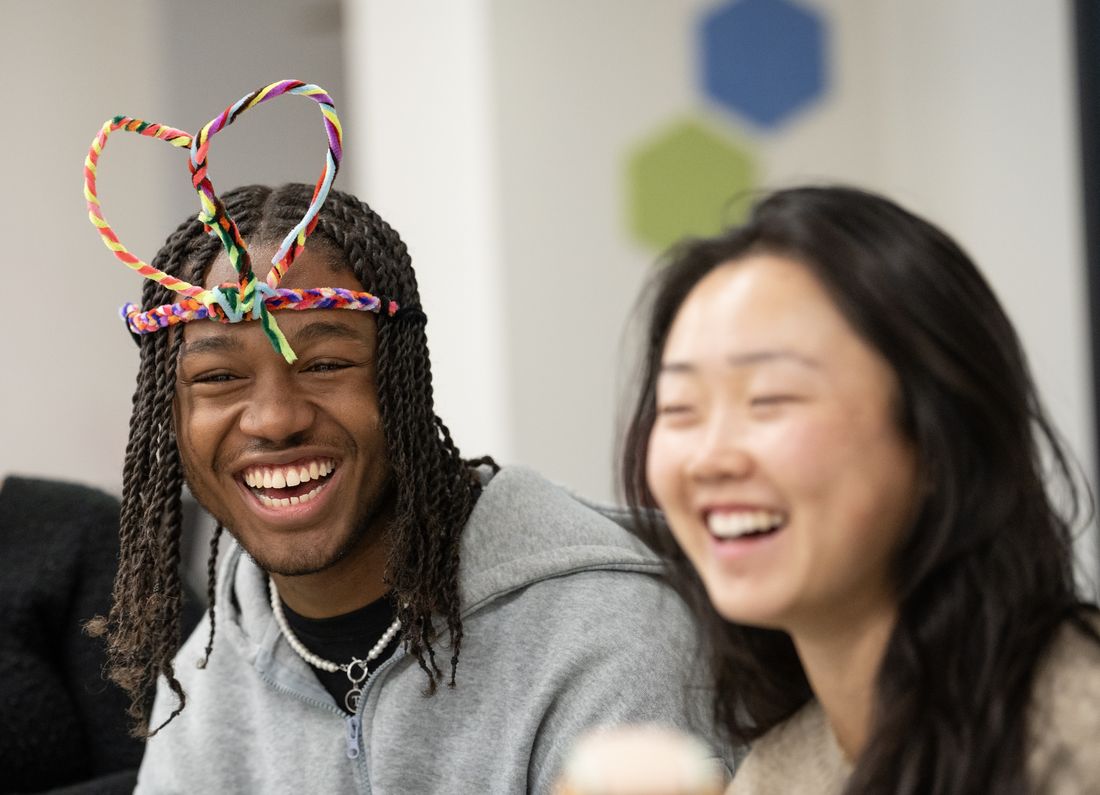 Photo: Mark Washburn
Start with the Human-Centered Design minor, one of Dartmouth's most popular minors. Six courses, any major, taught by faculty from across Dartmouth.
Students from every department amplify their major with rigorous, studio-based grounding in human-centered design.
Making Fast and Thinking Slow. DIAD’s Co-Lab embeds expert coaching in partner courses, helping students iterate more, learn further along the trajectory of their ideas, and work with AI and emerging tools with design judgment.
Dartmouth's HCD faculty are leaders in developing innovative design curriculum. We develop, test, iterate, and teach others ways to improve design education.
Grants and projects that support design work across Dartmouth from student projects, faculty research, course development, and co-curricular programs like Design Corps.
Partner your course with DIAD’s Co-Lab for AI-native design coaching. Apply for a faculty design project grant. Or just reach out. We'd love to hear what you're working on.
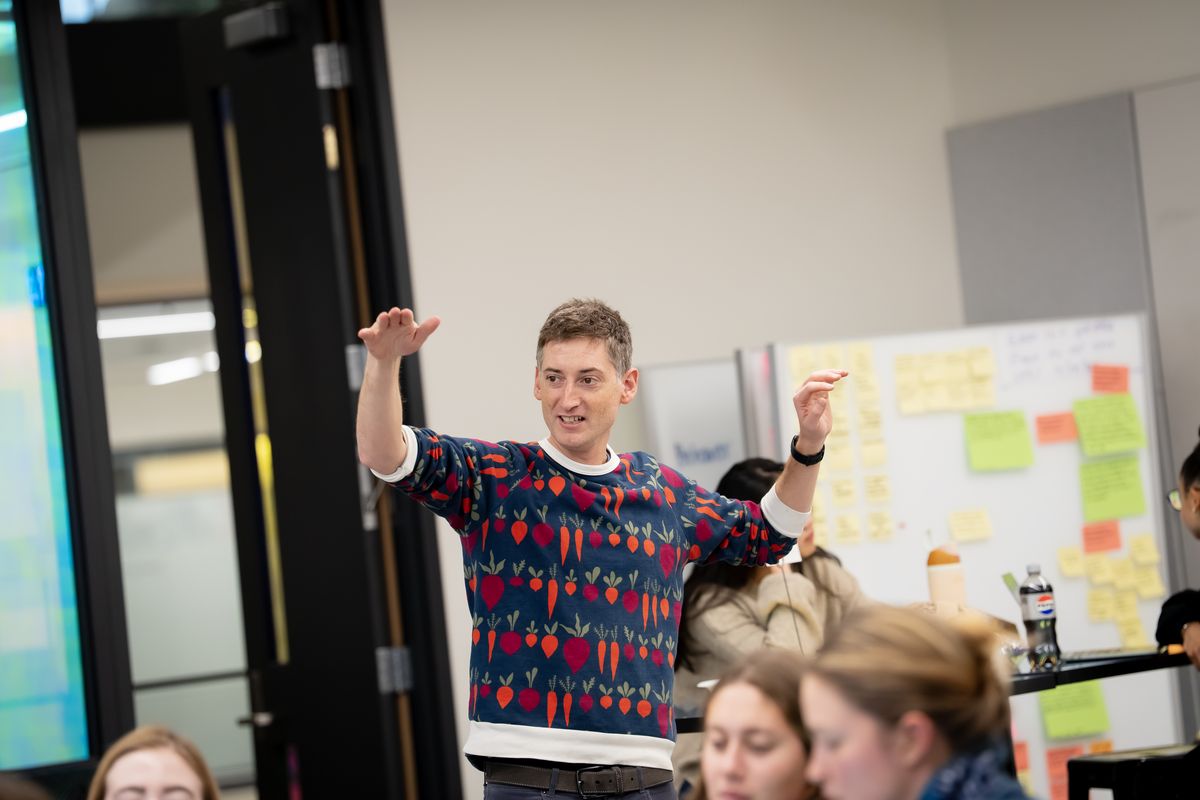 Photo: Mark Washburn
Human-Centered Design affiliated faculty and courses live in departments across Dartmouth.
An applied creative problem-solving discipline for addressing human needs, available to students in all fields of study at Dartmouth. Six courses taken alongside any major, taught by faculty from across the College. The goal is to provide students with the knowledge, experience, and creative confidence to help them to become innovators in their respective fields.
Six courses in three stages — a foundation, a set of methods from the social sciences, and a concentration of design electives chosen from across Dartmouth.
Start here. ENGS 12 Design Thinking introduces the core practice (observation, reframing, prototyping, iteration) that everything else builds on.
Two courses grounding your design work in how people think, behave, and live, drawn from anthropology, psychology, geography, sociology, or engineering research methods.
Choose three design-intensive courses from your areas of interest.
Courses eligible for the HCD minor, drawn from departments across Dartmouth. Which courses run in a given term, and who teaches them, rotates. For the current term's offerings and instructors, see the official Dartmouth HCD Minor page →
The full requirements, regulations, and modification options for the minor, as published in Dartmouth's Organization, Regulations & Courses (ORC). Click any heading to expand.
For advice, contact the Faculty Advisor for the minor, Prof. Peter Robbie.
Any major may be modified with the minor in Human-Centered Design. The HCD portion of the modification requires the same six courses — one from Section 1, two from Section 2, and three from Section 3 — and the same substitution applies for Cognitive Science, Cultural Anthropology, Neuroscience, Psychology, and Sociology majors.
Students wishing to modify their major with HCD should discuss their plans with their major advisor as well as the Faculty Advisor for the minor, Prof. Peter Robbie. Formal proposals for modification require the approval of both the major department and the Chair of the Department of Engineering Sciences, Prof. Vicki May.
Before you propose
Because HCD courses can overlap with existing majors, a modification should add something genuinely new. A strong proposal (1) has a clear intellectual rationale, (2) adds something significant that isn't possible within the straight major, and (3) avoids significant course overlap between the modifier and the primary field.
Course offerings and instructors rotate each term. For the current term's schedule, see the official Dartmouth HCD Minor page →
Making Fast and Thinking Slow. DIAD’s Co-Lab launched in 2025 as an AI-native design studio dedicated to accelerating learning in project based design courses. We do this by partnering with professors in any field, listening to their course learning objectives, and leveraging our knowledge of rapidly evolving multi-modal tools to build custom toolkits that help accelerate iteration, learning and potential project impact.
Design is changing fast. What a student can make and iterate has expanded sharply, from paper prototypes to fully functional ones, from sticky-note business models to working systems and life-cycle analyses. Default human-centered design curricula weren't built for this range. More iteration, done well, accelerates learning, so Co-Lab uses AI to multiply the iterations a student learns from inside a single project, without letting the tools crowd out the judgment that makes design good.
Co-Lab borrows the barbell idea: load both ends, not the middle. The judgment to choose the right mode at each stage of a project (not AI fluency, and not a blanket rejection of it) is the central thing students learn here. Because anyone can now prototype at full fidelity, students from every major bring their own discipline's way of thinking to work that used to belong only to engineers. In the studio, the judgment calls stay visible, including the dead-ends and the decisions about when to slow down and when to speed up. Process becomes part of the deliverable.
Multi-modal tools change monthly. Faculty and TAs can't evaluate what they can't see — and students can generate impressive output without the understanding it implies. DIAD’s Co-Lab embeds at the instructor's invitation in any course involving design, making, or applied projects, not just Thayer.
An instructor with a design, making, or applied-project course reaches out. We meet, understand the syllabus, and identify where AI-augmented work could extend student learning.
Co-Lab continuously evaluates the evolving tool landscape and builds a bespoke toolkit for your course: a curated stack rather than a generic AI playground, step-by-step workflow recipes mapped to your assignments, guest lectures, and TA training.
Drop-in studio, one-on-one coaching, office hours, Zoom support. We coach students on which tools help at which phase, how to keep creative agency, and when to trust AI output versus override it — in studio space where students from different courses cross-pollinate and build shared norms around AI use and attribution, through practice rather than policy.
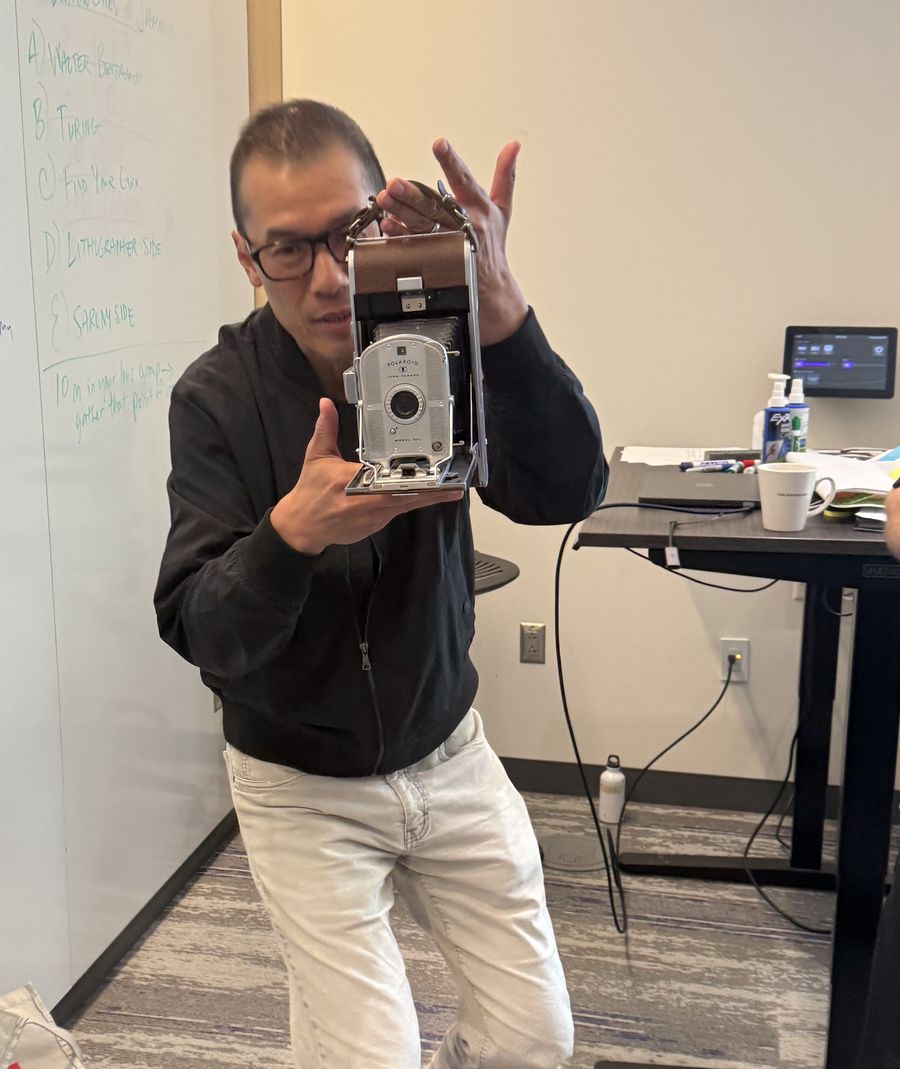
We're looking for students who are already active and eager to learn AI-native design methods to help serve our faculty partners. If that's you, reach out. We'd love to hear from you.
Co-Lab embeds in partner courses without disrupting the syllabus, and students using AI-augmented workflows iterate more and build stronger prototypes — visibly, across very different course formats and project lengths.
DIAD’s Co-Lab works with faculty across disciplines — from design thinking and creativity to entrepreneurship, language learning, geography, design ethics, design research, and emerging technology.
What we heard from faculty and students in partner courses.
Teaching students Adobe After Effects was always a headache; being able to scrap that module for what feels like a much more career-relevant, future-relevant, and enjoyable set of AI tools was great.
The fact that students surprised themselves is the biggest insight of this whole pilot. Students were surprised by the quality of the ideas and exhibits they all created — and frankly, I was surprised too.
Even though I might normally take a staunch anti-AI stance, this project helped me realize that it really is a tool that can improve quality of life for many people. It can also be a good sounding board for human-created ideas.
Having the creative freedom to present our product in multiple ways — through a hype video, physical pots and pans, snacks, a 3D printed prototype, and a Figma mockup — allowed us to tell a rich, multidimensional story.
The ways DIAD works with the Dartmouth community — supporting students, faculty, and staff to take on design projects in their own classrooms, labs, and corners of campus.
Small awards that lower the barrier to starting design work in any department. Amounts are set per project and combine funding with DIAD resources such as studio space, student fellows, and design coaching. Email us to discuss partnerships.
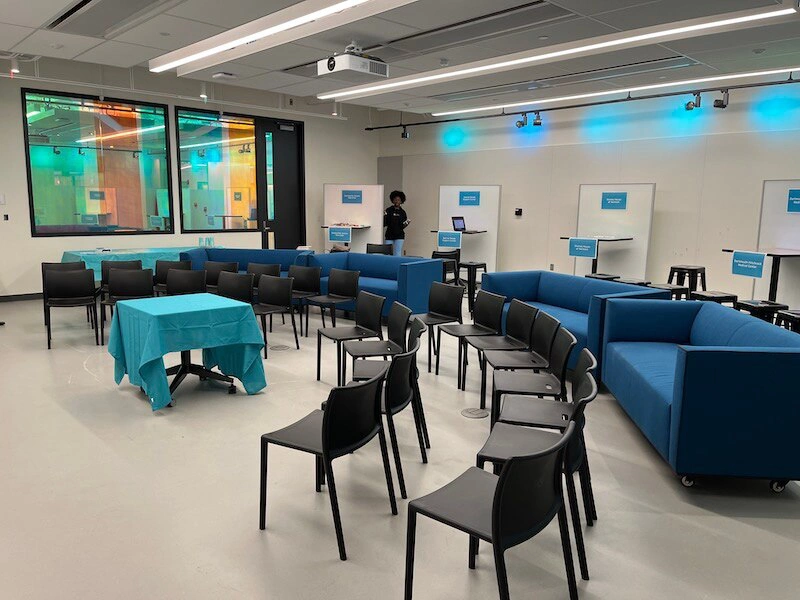
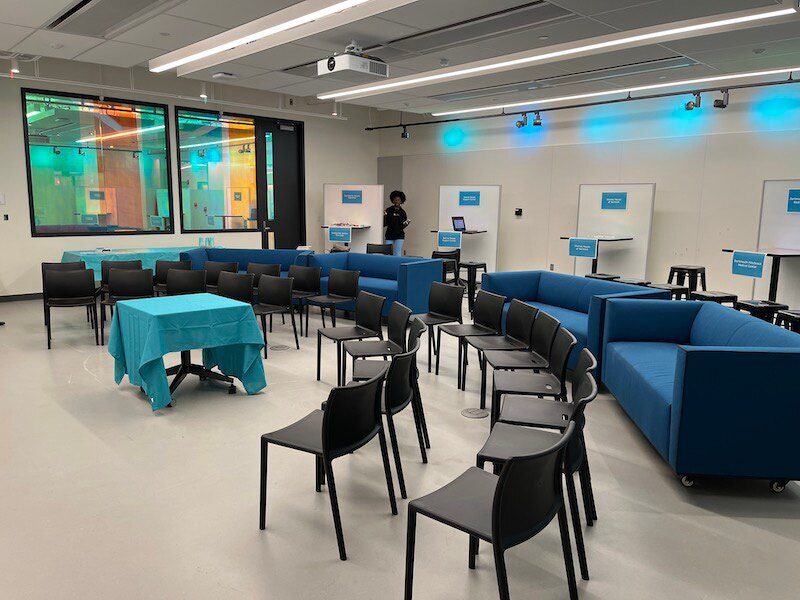
A hyper-flexible multipurpose room in the Class of 1982 Engineering and Computer Science Center where everything is on wheels, even the couches. Any member of the Dartmouth community can reserve it for design-related events: workshops, design sprints, working sessions, club meetings, presentations, exhibitions, special class meetings, and more.
Furniture: Bar-height and standard-height tables, dozens of chairs and stools, four moveable couches, stationary and mobile whiteboards.
A/V: Projector, room speakers, lecture capture, and built-in Zoom Room.
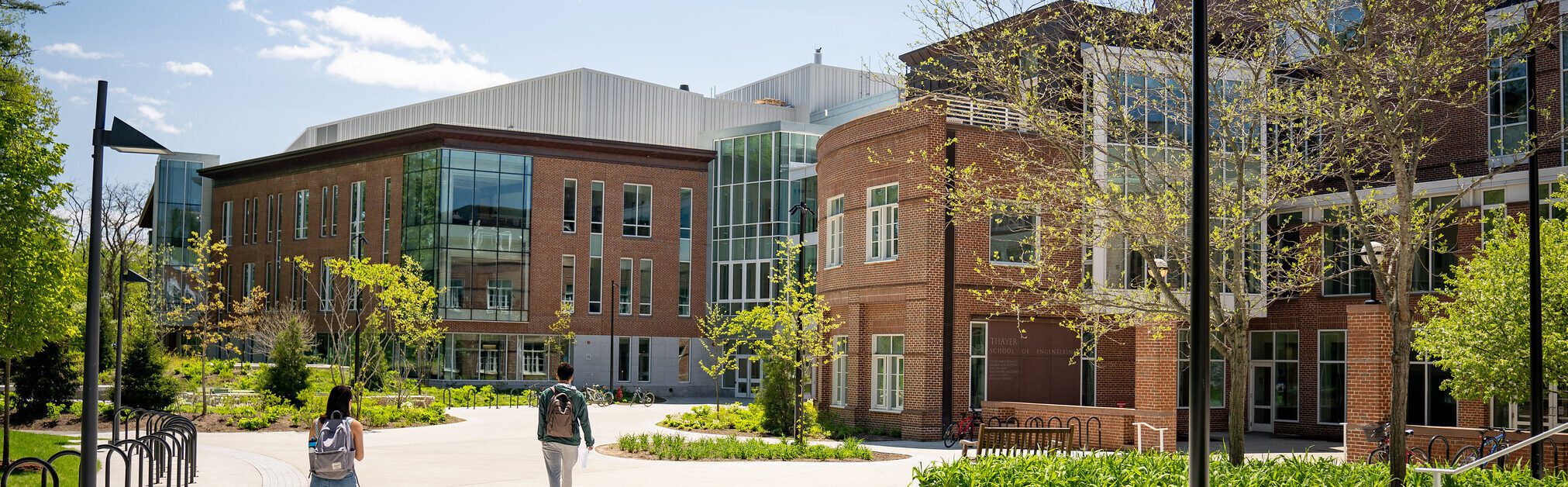
In 1987, studio art met engineering in a single course, Introduction to Product Design. That course became ENGS 12: Design Thinking, the cornerstone of the Human-Centered Design Minor. The Minor became the heart of a faculty community that now serves students and partners with faculty and staff from across Dartmouth. This community founded the Design Initiative at Dartmouth with the generous support of early funders who appreciated the long-term development of a strong foundation and made a bet that this is just the beginning of what is possible in the future.
DIAD works with partners across Dartmouth to foster interdisciplinary creative learning. Some of our collaborators:
Design at Dartmouth happens across campus. Below is a sample of past and current contributors to design initiatives. Faculty teaching in the HCD Minor vary by term. For the current-term schedule and instructor assignments, see the Thayer School of Engineering official minor page, which gets updated each registration cycle. For HCD program advising, contact Peter Robbie.
The Design Initiative launched a new program in 2026: Design Fellows are faculty-nominated students who have made design a shared practice across their majors. Fellows spend a three-term year working with faculty fostering Dartmouth’s design community, pursuing an independent study beyond the HCD minor, with the opportunity to exhibit their work.
Co-curricular student design teams partnering with campus offices to tackle complex challenges over 2–3 academic terms. 110+ students since 2021. Design Corps alumni include people now teaching in the HCD minor: Maura Cass '10 and Nina Montgomery '14. Learn more about the Design Corps Program.
Guest speakers in Dartmouth Design classes, student work and exhibitions, public lectures, and design-related events across Dartmouth. Have an event to add to upcoming events or the archive of past events? Email Design at Dartmouth.
I fell in love with design thinking because the whole premise is: through design, we can create the world we want to see. My government courses give me the foundation to understand why problems exist. Design thinking gives me the tools to help solve them.
I’ve learned that good design arises from a playful mentality and a deeply personal obsession to solve a problem for someone you can name.
My HCD classes and professors at Dartmouth have taught me to see design in everything. It’s the one thing AI cannot replace, only augment.
Hosting a design-related talk, exhibition, workshop, or gathering at Dartmouth? We'll list it here.
Email Design at Dartmouth →Recent visits, talks, and gatherings from across the design community.
Professors Rafe Steinhauer and Adam Norwood are launching a cross-district learning community for the people leading conversations and decisions about AI in their schools and districts. Sessions begin this fall and focus on school- and district-wide decision-making, drawing on design thinking, systems thinking, and co-design.
If you hold a formal or informal role coordinating AI decisions at a public school or district in Vermont or New Hampshire, register your interest. Outside the region and this work speaks to you? Get in touch.
Read Rafe’s essay on the approach, in President Beilock’s series on AI and higher education →
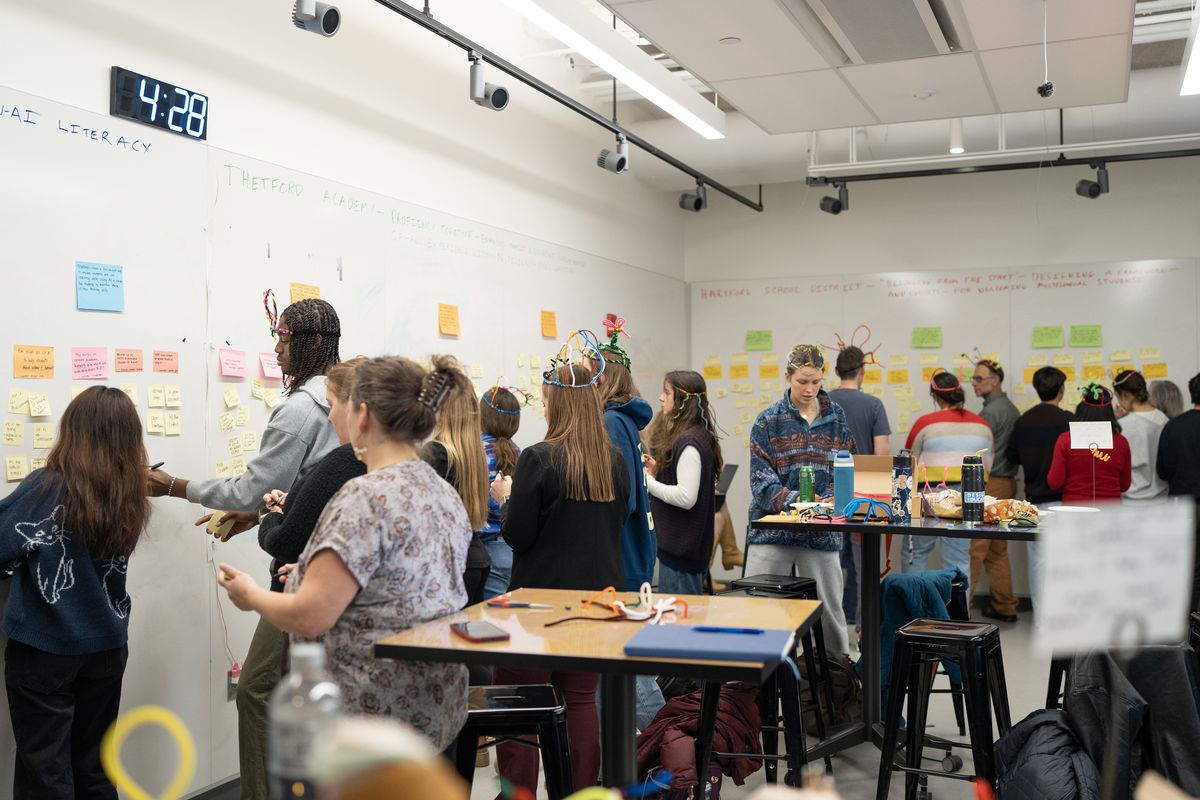
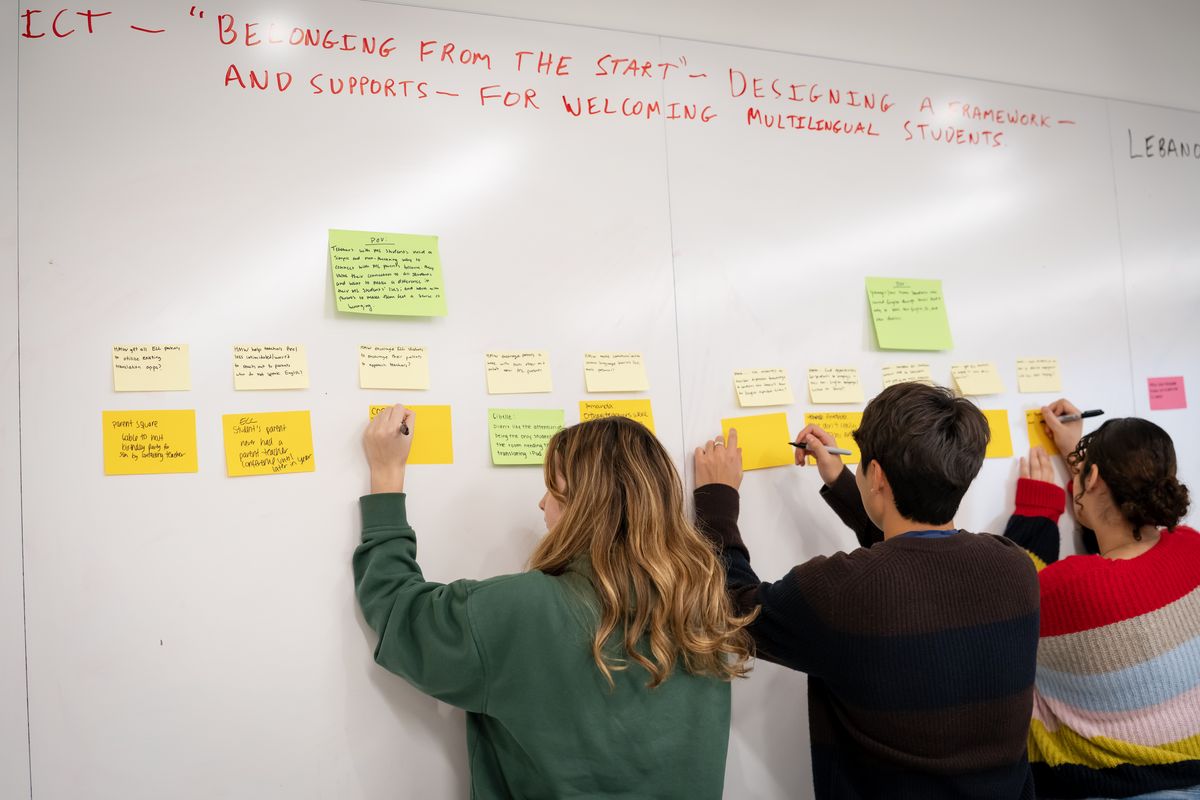
On September 16 the first Design Fellows met in the Design Loft. Thirteen students from cognitive science, economics, neuroscience, psychology, computer science, environmental studies, and engineering make up two cohorts: Inaugural Fellows from the Class of 2027, who spend this year in the program, and Honorary Fellows from the Class of 2026, recognized for what they built as students.
Over three terms the Fellows meet as a cohort, each take on an independent design project beyond the HCD minor, and help foster the campus design community, with the opportunity to show their work in a spring showcase. Nominations for the 2027–28 cohort open in spring 2027.


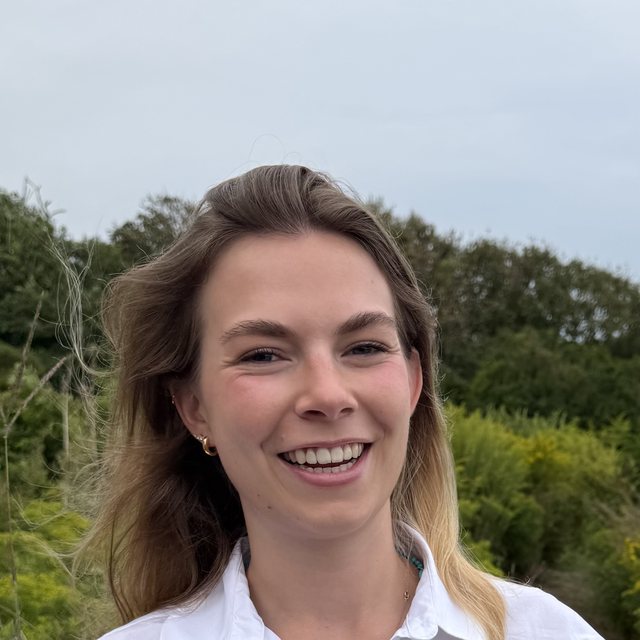
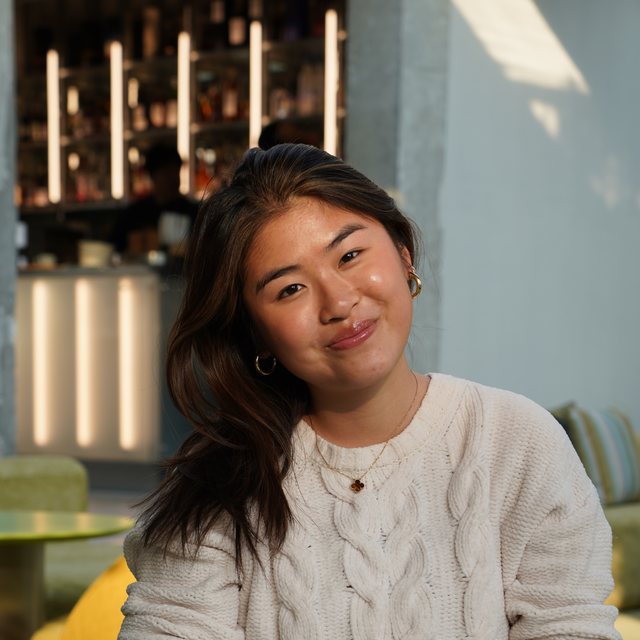

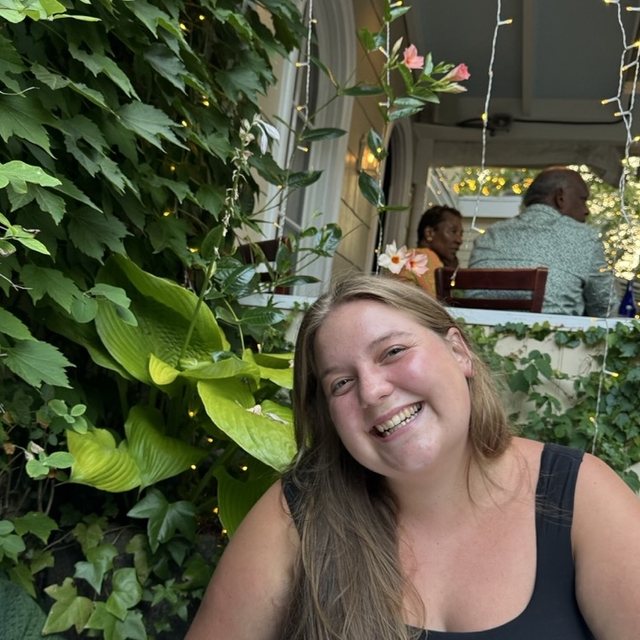
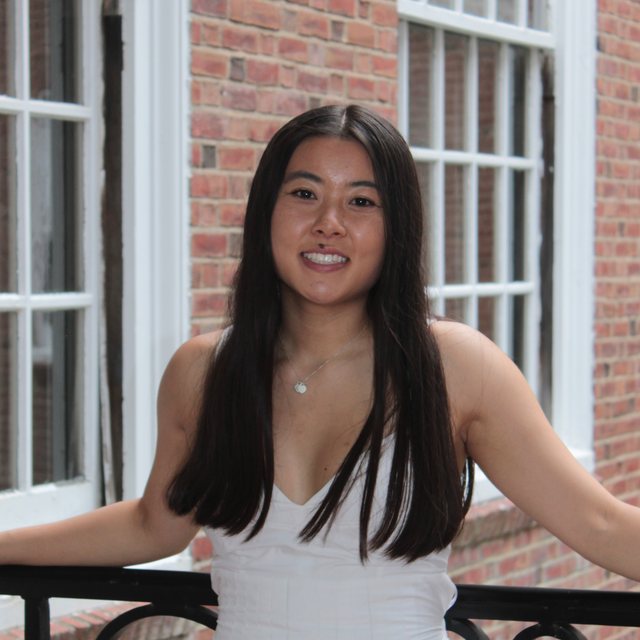

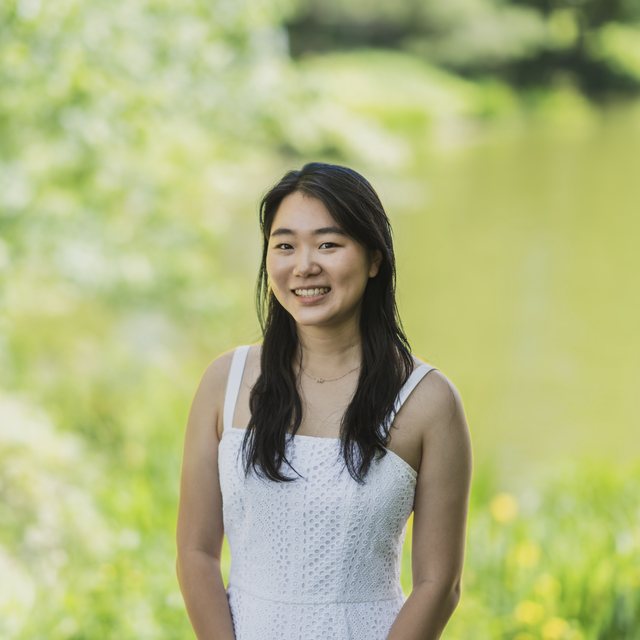
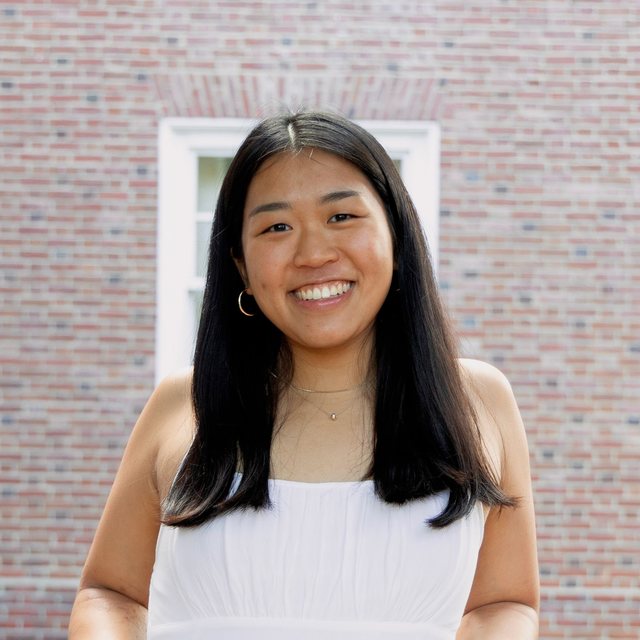
A graduation reception in the Design Loft celebrating the Human-Centered Design minor’s graduating students and the work they made across their time at Dartmouth.
One unit of ENGS 15.12 Design & Entrepreneurship explores how entrepreneurial leadership is unique: founders must create an organizational culture rather than steer an existing one. If a startup has to stand out — to innovate — to survive, how do founders build cultures conducive to risk-taking? Jeff spoke with the class about his experience trying to foster a culture of innovation inside one of the largest corporations in the world, and about how students launching careers today need to demonstrate their uniqueness, not just their qualifications.
Hasit spent more than a decade at BBC News in London as a news editor, digital strategist, and foreign-affairs producer reporting across South Asia, Europe, and Africa. He was a Nieman-Berkman Fellow at Harvard and edited news at Quartz before joining The New York Times. He joined Week 3 of ENGS 15.15 Design Survivor: Cultivating Creativity Within Constraints to share a working journalist’s craft of interviewing: how to earn trust and listen past the expected answer.
One of Iceland’s most celebrated writers, Andri Snær has published in more than thirty languages across wildly different forms — the Philip K. Dick Award–winning novel LoveStar, the first children’s book to win the Icelandic Literary Prize, and the climate narrative On Time and Water. He joined Week 6 of ENGS 15.15 Design Survivor to talk about building a career of creative work that refuses to stay in one domain.
Chengwei studies how luck shapes success, how organizations learn in the age of AI, and how contrarian thinking turns decision biases into better strategy — the subject of his forthcoming book Smart Contrarians (Harvard Business Review Press). He joined the Week 7 challenge of ENGS 15.15 Design Survivor on collective intelligence and creative disagreement: designing useful friction into how teams think together.
Brian joined ENGS 15.07 Research Methods for Human-Centered Design to share a design-engineering career that runs from IDEO through Willow’s wearable breast pump to heart-recovery technology at Abiomed — and how research shapes engineering decisions at each of those scales.
Ann joined ENGS 15.07 Research Methods for Human-Centered Design to talk about carrying design research into public health at the federal level — what it means to be the first designer in the room, and how design earns its seat in policy.
ENGS 15.07 Research Methods for Human-Centered Design hosted a panel of Dartmouth alumni on where design research careers lead — how each panelist’s path unfolded after Dartmouth and how they use research in their work today.
Maven is one of the defining consumer brands in modern healthcare. Julie breaks down what it actually takes to build trust, clarity, and emotional resonance in a category that’s traditionally hard to market — and how you build a brand that can scale to a billion-dollar company.
Zoe has built and led innovation across consumer, food, wellness, and venture-style teams. She shares what great innovation leadership looks like in practice, why innovation efforts often stall internally, and how to build momentum when the system resists change.
Sam leads a company working at the intersection of clinical care, patient experience, and AI. He talks about what it looks like to apply AI to real-world healthcare problems (not demos), what’s hard about building in regulated environments, and how to stay grounded in outcomes.
On campus after his talk, Sam has offered to meet with student startup teams wanting advice on their next steps.
Arturo has been building EVERY since right after college, raising hundreds of millions to rethink our food system from the ground up using biotech. He shares the honest version of the early days: how conviction forms, how fundraising really works, and what he wishes he knew before jumping into founder life.
Sassie leads one of the most ambitious aerospace startups out there. She talks about what it’s like to build in a frontier industry, lead as a woman in a high-ego category, and pursue hard technical missions in a world dominated by Musk/Bezos narratives. The CEOs of Boeing and Lockheed Martin have called her the best leader in aerospace today.
Mike has helped lead creative marketing that doesn’t just launch a movie — it turns it into a global franchise and billion-dollar business. From the Minions universe to The LEGO Movie, he breaks down how you build cultural momentum at scale: the creative choices, the partnerships, the timing, and the discipline behind what looks like “magic” from the outside.
Ke and Emma joined ENGS 15.11 Design & Education to explore how human-centered methods reshape schools as learning systems — designing the conditions under which both students and educators learn. Two student reflections from the visit:
“I resonated with their ideas of encouraging divergence and not viewing decisions as a one-time, high-stakes moment, because I think both ideas are relevant to our project. I think we keep falling into the familiar approach of seeing the ‘groupthink’ ideas that keep emerging as the most resonant takeaways, instead of looking for insights through those that were more thoughtful with their responses.”Student, ENGS 15.11
“[Ke and Emma] described continuous improvement as getting stuck in ‘Plan-Do’ mode, skipping over the ‘Study’ and ‘Act’ steps that make for true learning cycles. Emma and Ke encouraged the ability to be agile in your decisions in order to create more opportunities and be in ‘open mode,’ since time will always be a constraint of some sort.”Student, ENGS 15.11
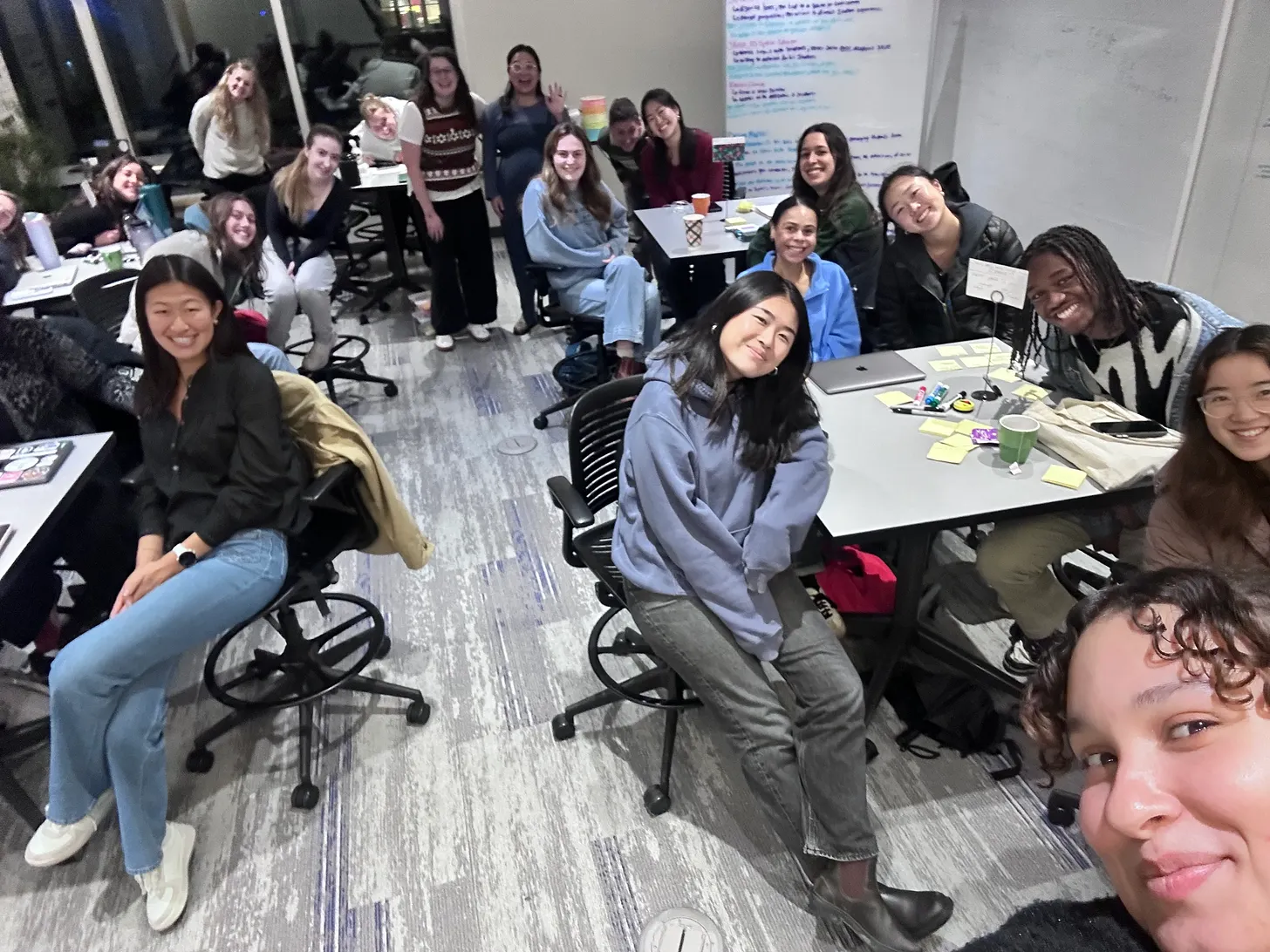
The Design Initiative at Dartmouth (DIAD) is a hub for human-centered innovation, harnessing Dartmouth’s historic strengths and the power of design to shape the next generation of thinkers, doers, leaders, and visionaries. It empowers students and faculty across disciplines to solve seemingly unsolvable problems for a more just, ethical, and sustainable world. Across 2022–2023, drawing on the partnership between technology and the liberal arts and on generous philanthropic support, DIAD expanded design across campus, fueling new multidisciplinary scholarship, courses, and experiential learning; design-driven research; and partnerships that equipped faculty, staff, and students with tools to tackle local and global issues in novel ways.
DIAD’s impact in this time period spans three core pillars: curricular, co-curricular, and research and scholarship.
During 2022-2023 academic year, DIAD awarded 11 Dartmouth faculty from multiple disciplines with funding and mentorship to support the creation of new design-based curricular modules or courses that have helped deepen and enhance student learning. DIAD funding and mentoring support have helped Dartmouth faculty bring new insights and perspectives to the classroom and provide new tools for students in addressing our world’s most complex challenges, such as food scarcity, energy justice, and climate change. As a result, at least 304 Dartmouth undergraduates experienced the integration of design into non-engineering course curriculum.
“These grants reflect the exceptionally innovative and interdisciplinary work happening all across the Dartmouth community. The projects showcase the possibilities unlocked when design becomes a bridge for boldly creative, inclusive, and impact-driven scholarship.”—Professor Elizabeth Murnane, Chair of DIAD Faculty Steering Committee
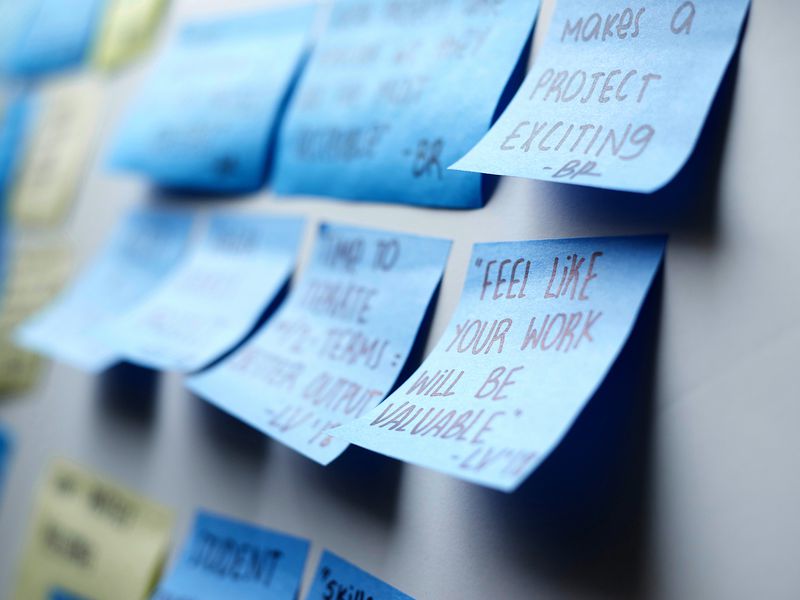
New DIAD-Funded Courses (2022–2023)
DIAD hosted 6 workshops focused on empowering faculty from across Dartmouth how to integrate design and design thinking into existing courses. The workshops drew participation from faculty in the following disciplines: Anthropology, Cognitive Science, Computer Science, Engineering, Film and Media Studies, French and Italian, Geography, Latin American Studies, Latino and Caribbean Studies, Mathematics, Middle Eastern Studies, Philosophy, Psychology and Brain Science, Religion, Spanish, Sciences, Spanish and Portuguese, Studio Art, and Theater.
A new DIAD-funded interdisciplinary course is helping students better understand how local energy is generated, distributed, and consumed. Using design methodology, students work with community partners from the Upper Valley to the Mapuche-Williche Indigenous communities in Chile towards human-centered sustainable energy solutions. Through their work, Professors Maron Greenleaf (Anthropology) and Sarah Kelly (Geography) earned the prestigious Apgar Award for Innovation in Teaching.
Learn More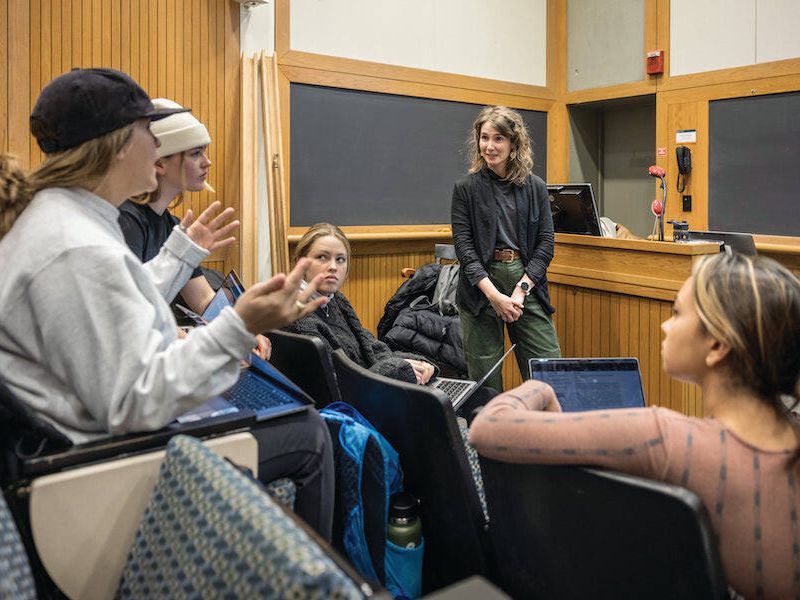
During the 2022–2023 year, the Master of Engineering program formalized a special engineering design component within each specialized engineering track, carving a pathway for students to complete coursework and real-world project experience that provides both theory with a practical experience in engineering design. The first three cohorts of MEng students completed industry-sponsored engineering design projects throughout 2022 and 2023. In addition, starting in the fall of 2023, Dartmouth will offer a new engineering design course sequence for masters-level students, similar to ENGS 89/90 capstone project offered to Bachelor of Engineering students.
Developed and taught by DIAD faculty, the Creativity, Innovation, and Design online summer course provided 40 high school students an interactive, hands-on introduction into the creative discovery and problem-solving process of the world’s talented engineers and product developers. Adapted from the popular ENGS 12: Design Thinking course as a four-day online intensive, high school students from all over the country engaged in interactive problem-solving, learned how to develop unique solutions and create meaningful innovations in service to society.
“The opportunity to process, imagine, and ideate what a future filled with joy could look like with expert faculty and fellow alumni was a gift. I particularly appreciated learning how design thinking can expand how I view and create potential paths toward meaningful, rewarding life goals.”—Dartmouth Alumni participant
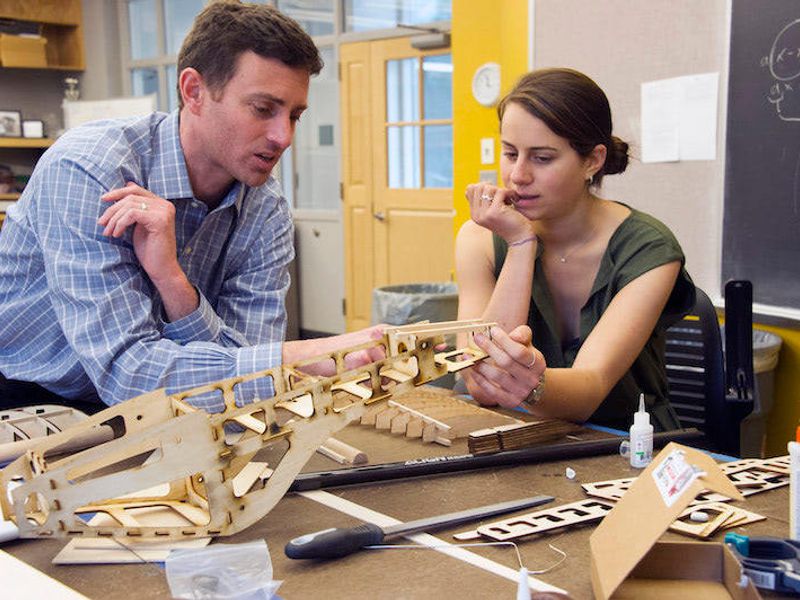
A six-week online course leveraged the power of design thinking and the principles of emergence to help 16 Dartmouth alumni navigate career and personal change, and equip them with tools facilitate growth and capacity to create and build lives with meaning and purpose.
Beyond formal courses and programs, it also carried design thinking across campus, with a crash course for the Institutional Diversity & Equity office and workshops for Dartmouth LEADS and Division of Student Affairs staff; student-led workshops for the Energy Justice Clinic (22X); the “XR in the Humanities” Fellowship at the Data Experiences and Visualization (DEV) Studio; a Design Justice faculty book club; and funding for Learn Engineering through Applied Projects (LEAP) at the Cook Engineering Design Center and for First-Year Research Experience in Engineering (FYREE) projects.
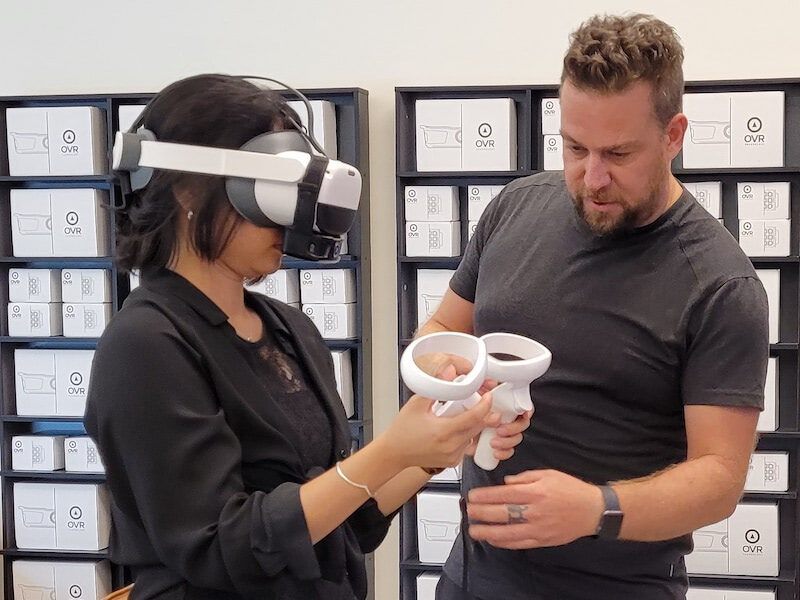
Throughout 2022-2023, the Design Initiative at Dartmouth (DIAD) funded student-led activities and programs that provided opportunities for students to flex critical design thinking skills and engage in real-world projects that help improve the lives of others within our community — and beyond.
DIAD funded 19 design projects conducted by students, faculty, and staff, awarding approximately $75,000 for on-campus and off-campus design efforts. DIAD has collaborated with 12 different organizations and institutes on campus and with faculty from 18 departments.
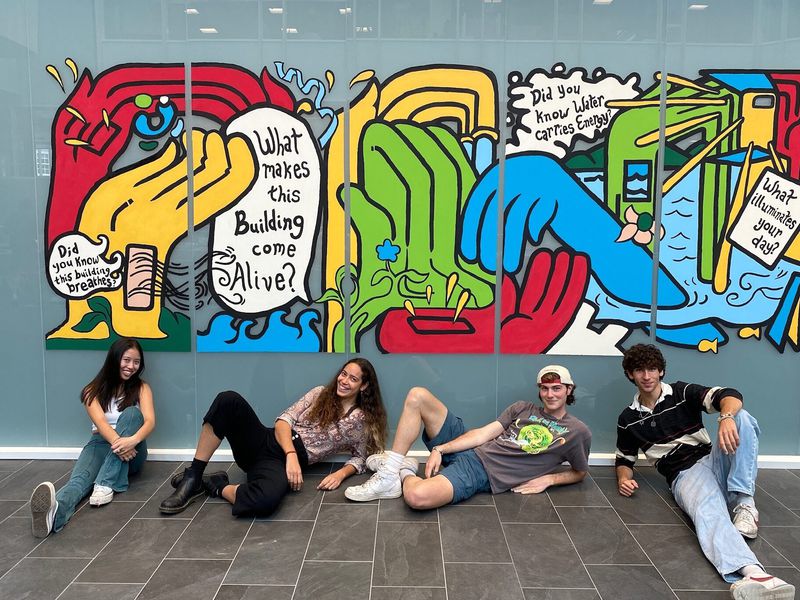
DIAD’s Design Corps pairs student teams with Dartmouth organizations to address on-campus challenges using human-centered design to improve community-wide Dartmouth experiences. Students on Design Corps teams have helped the Arthur L. Irving Institute for Energy and Society make “energy visible” (pictured), assisted Dartmouth’s Alumni Relations to provide better career support to young alumni, and enhanced the framework for communicating wellness resources to students.
“I am extremely impressed with Design Corps. Not only did they comprehensively tackle a problem for us, but it was wonderful to provide content to the student team while the Design Corps managed the process. The structure that Design Corps offers has been invaluable, making the process as enjoyable as the final product is useful.”—Amelia Kahl, Barbara C. and Harvey P. Hood 1918 Curator of Academic Programming, Hood Museum of Art
In addition, the Design Corps helped design and create solutions for a variety of partners across Dartmouth. Sample projects, as of April 2023, include:
As of April 2023
DIAD helped fun a number of field trips off-campus for students to witness and learn more about how human-centered design and design thinking is applied in the real world.
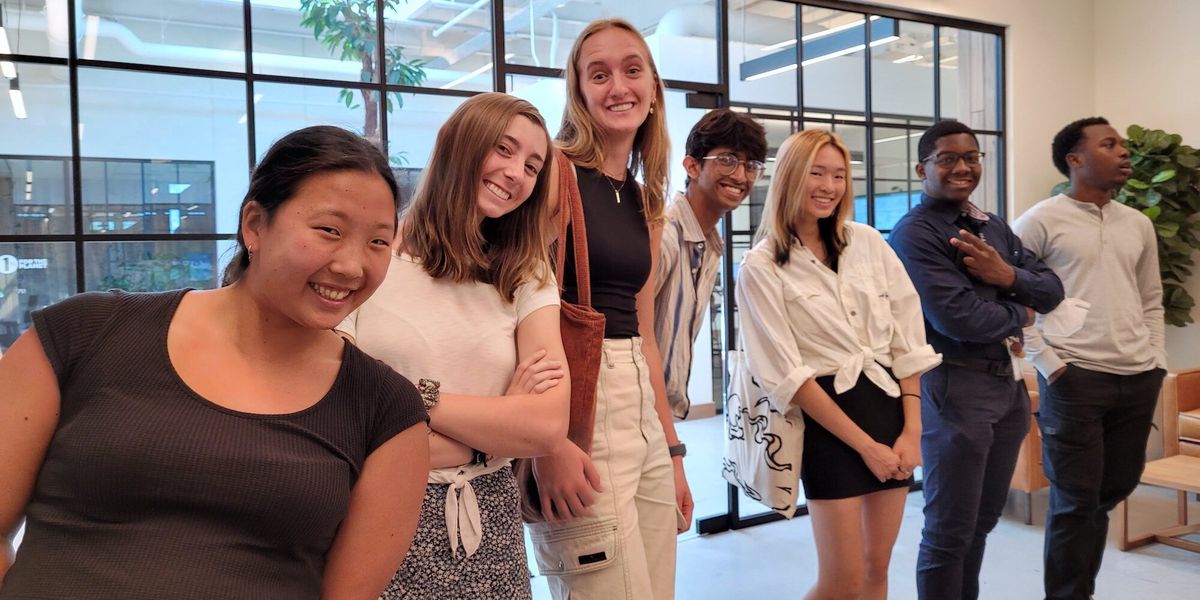
Sid Babla and LB White at the Student Wellness Center (SWC) used their DIAD grant to implement an accessible digital tool that highlights available wellness resources and encourages students to reflect on their own well-being. The Design Corps team helped SWC identify communication and accessibility barriers that students faced to the resources available.
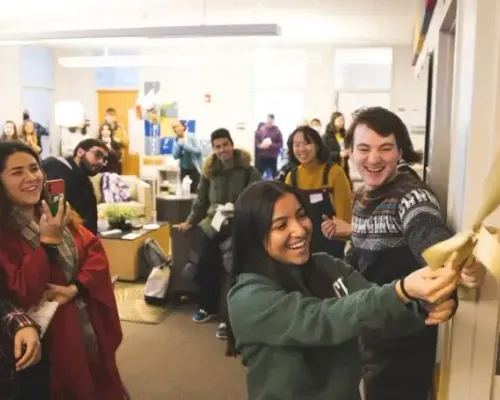
The Energy Justice Clinic completed a series of design thinking workshops with the Design Initiative at Dartmouth (DIAD). The students gained tools like affinity mapping, feedback matrix, and Powers of 10 for synthesizing information and debriefing interviews that they then applied to future research projects.
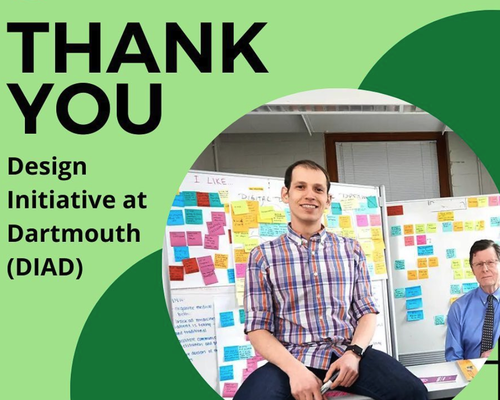
During 2022–2023, DIAD hosted numerous guest speakers with design leadership and expertise across a wide range of disciplines for lectures, workshops, panels, and collaboration with faculty. Speakers appeared in design workshops inside existing student programs and before audiences including the Rockefeller Leadership Fellows, the Foundations in Social Impact Program, the Sustainability Action Program, and the Women In Innovation Club.
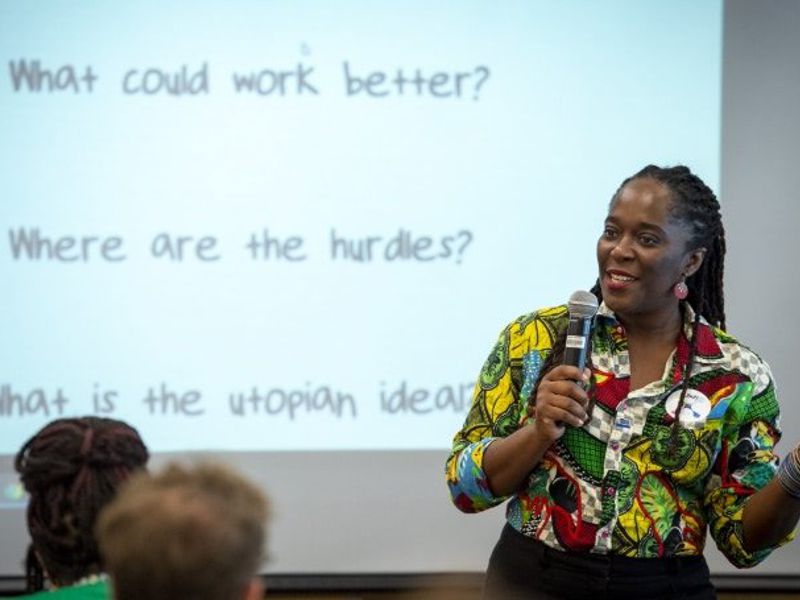
DIAD-sponsored campus-wide events and speaker series:
A conference of design faculty and thought leaders from higher education institutions across the nation.
An event hosted by Tony Pritzker ’82 to gather alumni, parents, and friends to learn about how Dartmouth faculty are empowering students to become collaborative innovators who are designing solutions for a better world.
In 2022–2023, the Design Initiative at Dartmouth (DIAD) funded 17 projects led by students, faculty, and staff that incorporated human-centered design and design thinking to improve lives and create social impact on campus and beyond.
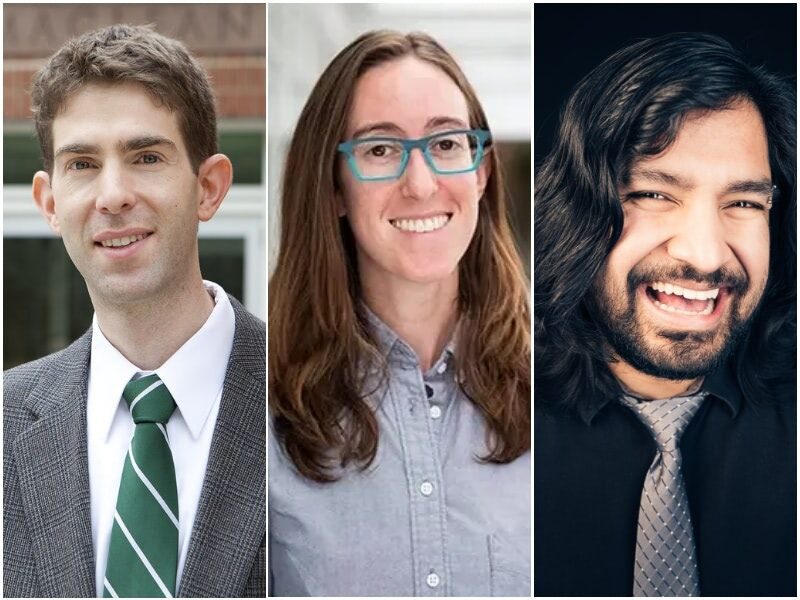
DIAD-sponsored Dartmouth Speculative Fiction Project is aimed at inspiring speculative fiction based on Dartmouth research to critically examine changes in society, inspire future design, and also comment on how new technologies might affect the way we live. Speculative fiction envisions possible futures at the intersections of technological and societal trends through a human-centered lens. The project brings together eight award-winning established and rising-star authors abd luminary Dartmouth professors for a writing retreat followed by production of an anthology of short stories to be published in the special issue of a high-profile magazine. Held in Hanover in 2023, the events include public talks, panel discussions, substantial engagement of Dartmouth undergraduates, creation of original art, as well as readings and promotional activities to elevate public discourse about the future of design in our society. The Dartmouth Speculative Fiction Project is co-led by Associate Professor of Engineering and DIAD Co-Director Sol Diamond, Department of English Lecturer Rebecca Clark, and writer and artist Sharang Biswas ’12 Th’13 (pictured).
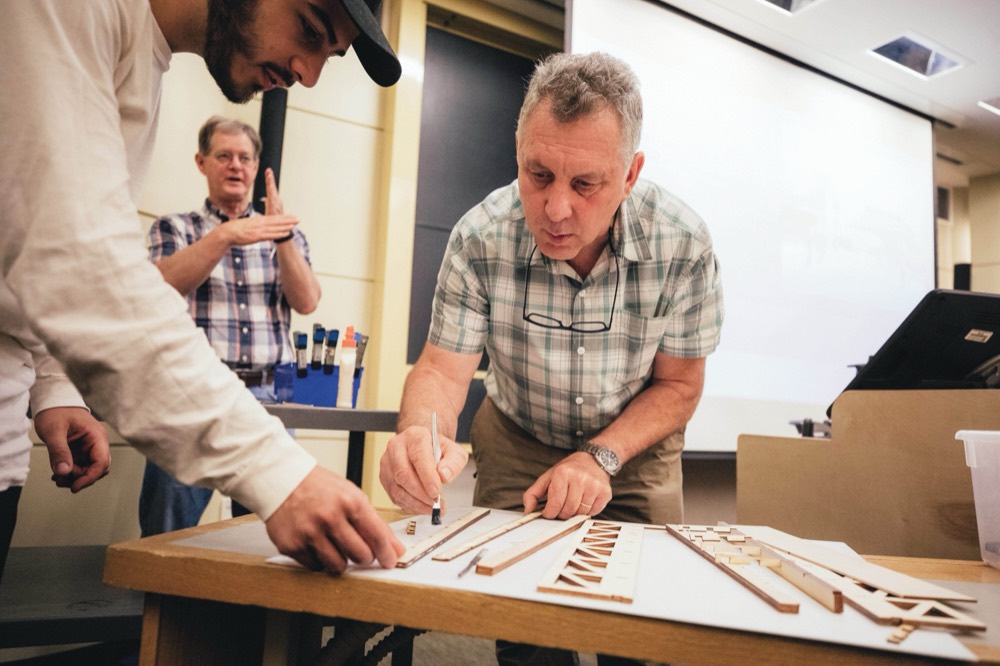
MShop Operations Manager and Technical Instructor Lee Schuette (pictured) and Director of Sustainability Rosi Kerr will use their DIAD grant to develop a nine-week engineering sciences co-curricular non-credit course titled Sustainable Methods of Design Prototyping. The course will teach fabrication skills that integrate hand tool use, material properties, process, and sustainable practices, and help students build conceptual skills with a vision for “upcycling” or creative reuse of materials. The project integrates design, technology, craft, engineering, and sustainability in order to expand student’s ability to design and build in an environmentally reflexive manner.
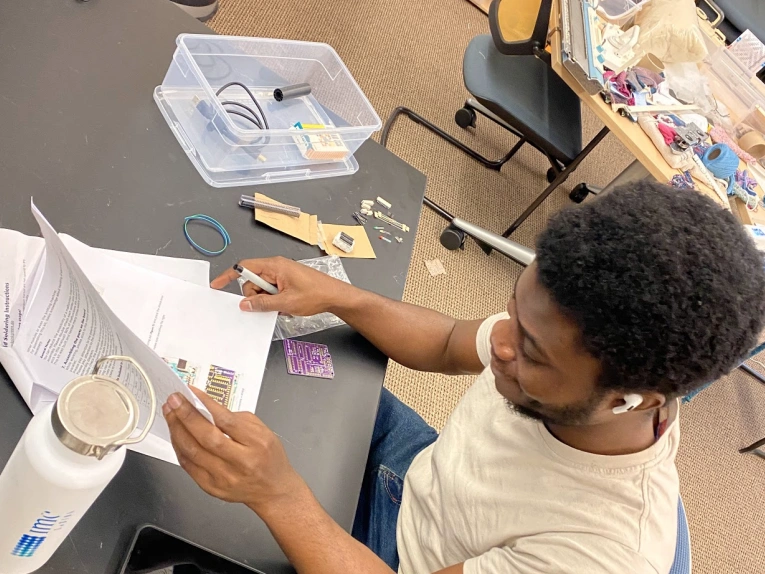
Molly Morin in The Digital Justice Lab and Department of Film and Media Studies, along with Nikki Stevens and Professor Jacqueline Wernimont, will use their DIAD grant to help tie the innovative potential of knit textiles (pictured) to their environmental impact and cultural history. Funding will enable the first phase of “KnitLab”: a programmable knitting machine that runs on contemporary graphics software; documentation for its future use; and a library of knit textiles from new and traditional fibers. Bringing together engineering, design, information theory, art, and history, “KnitLab” will facilitate thinking about information theory, code, and data visualization/visceralization, and offer a material resource for design, studio, and experimental projects.
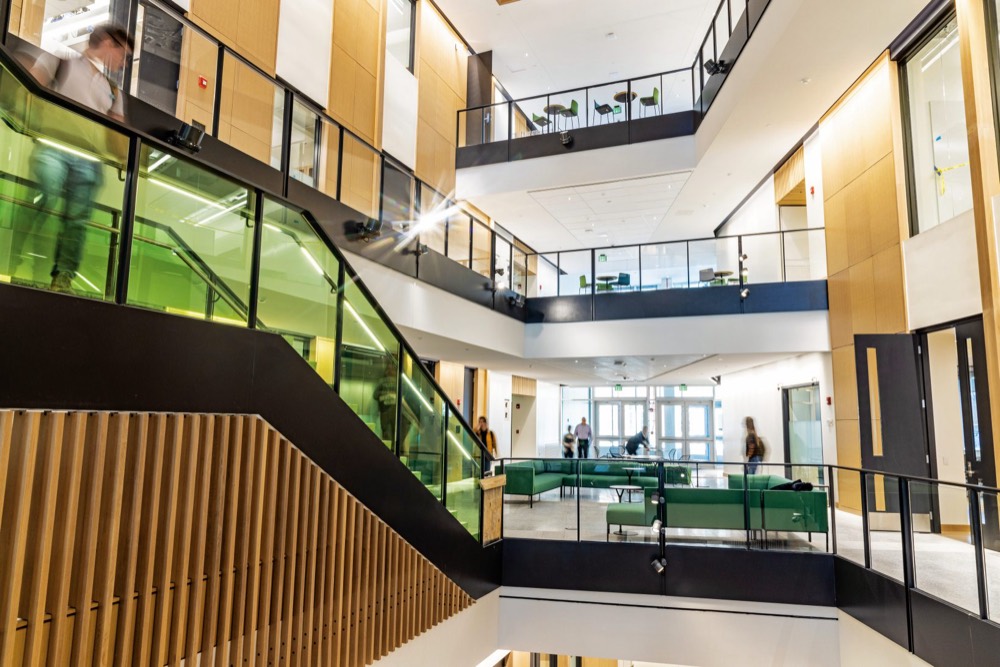
DIAD is headquartered in the Class of 1982 Engineering and Computer Science Center in the Stuart Family Design Commons.
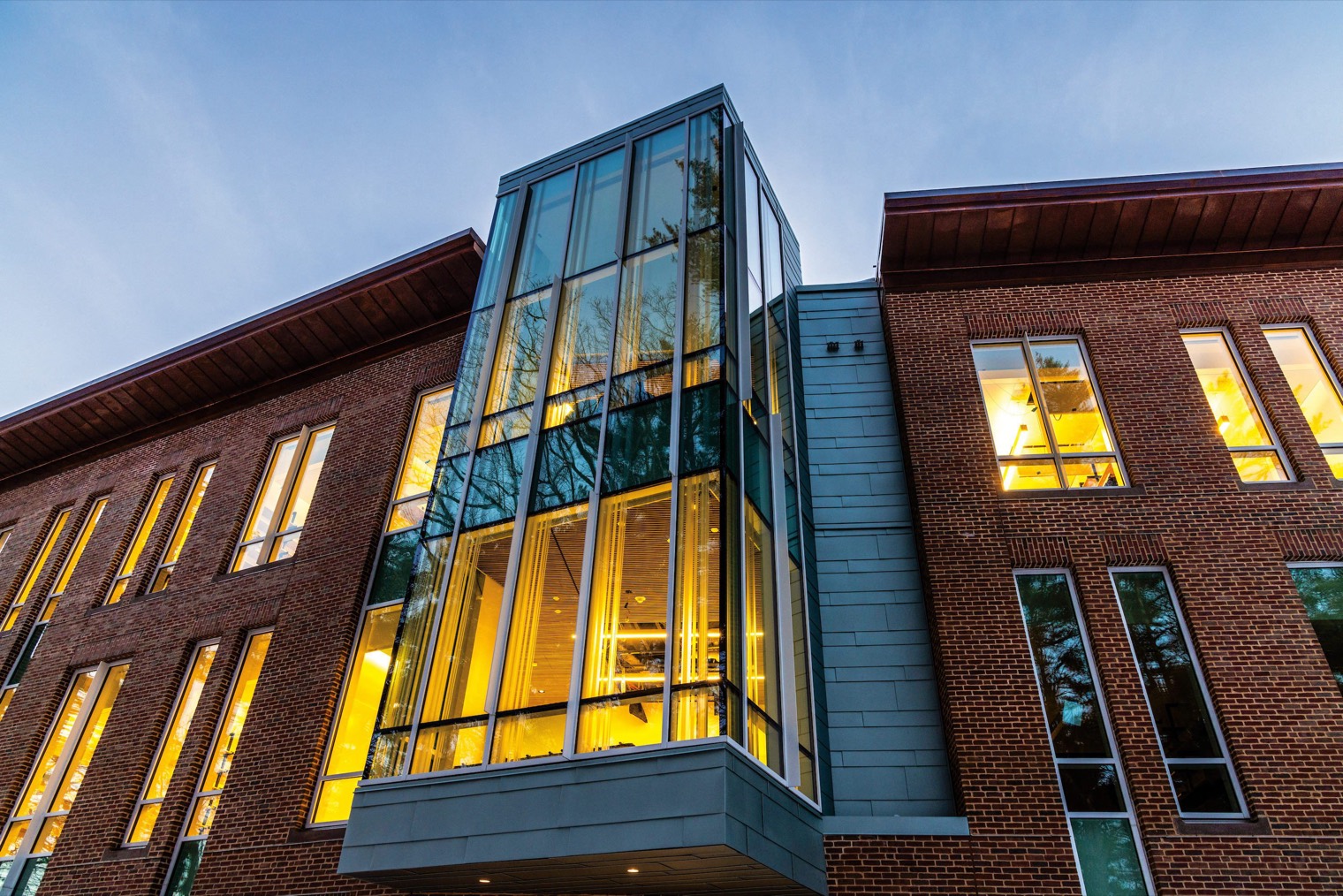
Located inside the new engineering and computer sciences center, Stuart Design Commons include the Design Loft, Design Lab, and a 48-seat tech-enabled active learning classroom. These dedicated spaces have helped further activate student and faculty interest in design. The Design Lab currently hosts three engineering graduate students, nine undergraduates from the ENGS 85.11: Computer Aided Design and Kinematics course, and two researchers. The Design Loft hosts a large variety of workshops (hosted by DIAD, Thayer, or across Dartmouth), study groups, meetings, lectures, showcases — averaging six different groups reserving the Design Lab per week.
Through the generosity of Brian ’99 and Jana Neff ’00, Dartmouth students have the opportunity to engage in 3D metal printing in on advanced manufacturing equipment at the University of New Hampshire's Olson Center for Advanced Manufacturing. Since the 2022 fall term, students have been actively working in 3D metal printing for their ENGS 89/90 projects.
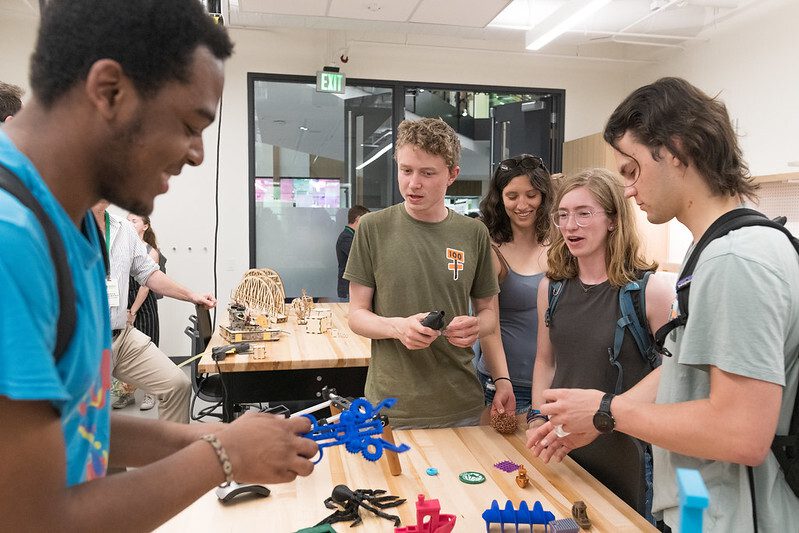
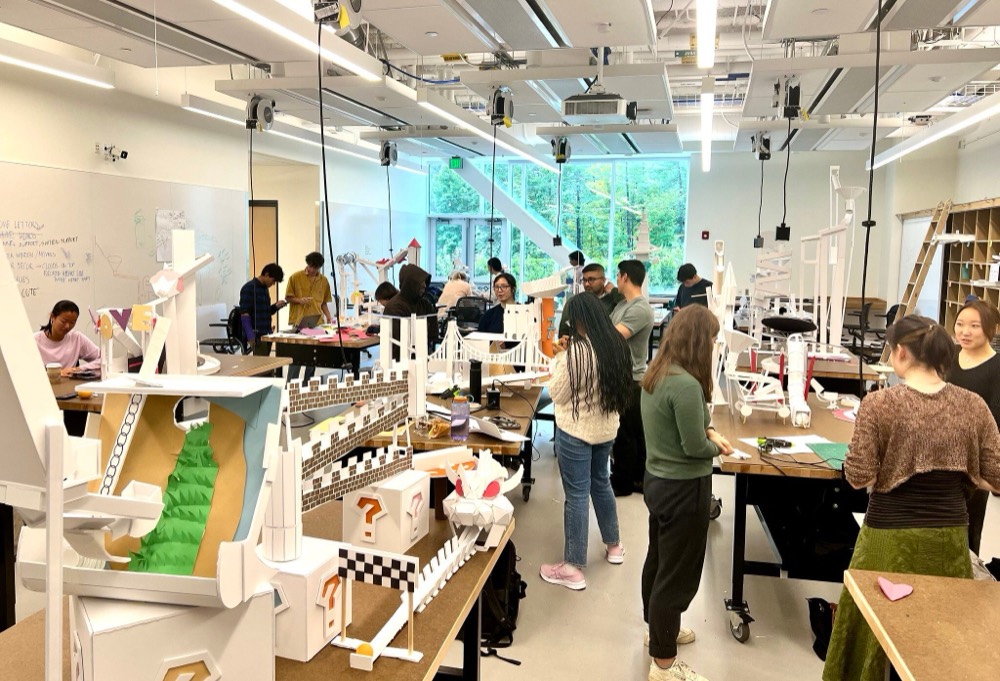
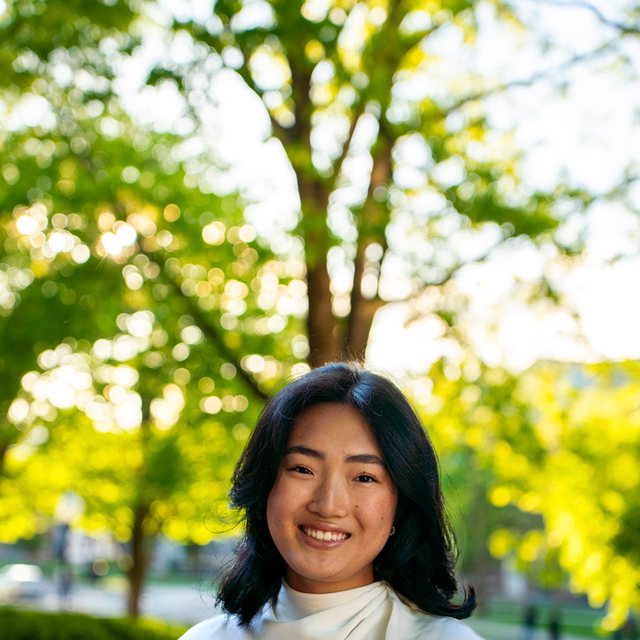
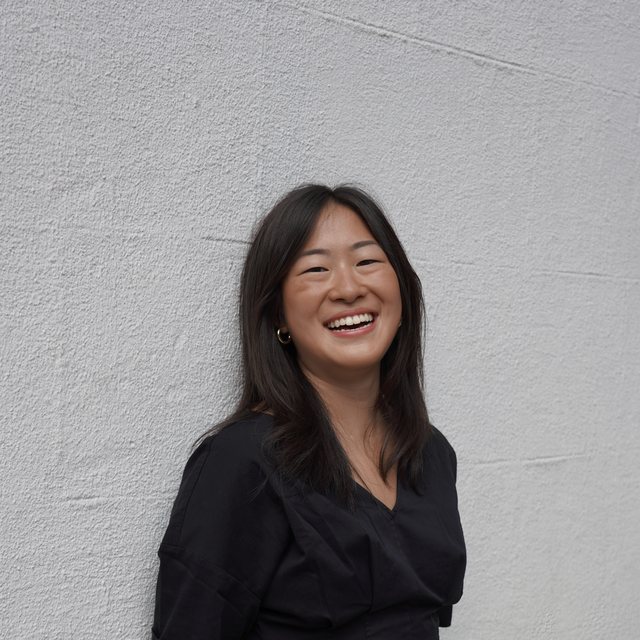
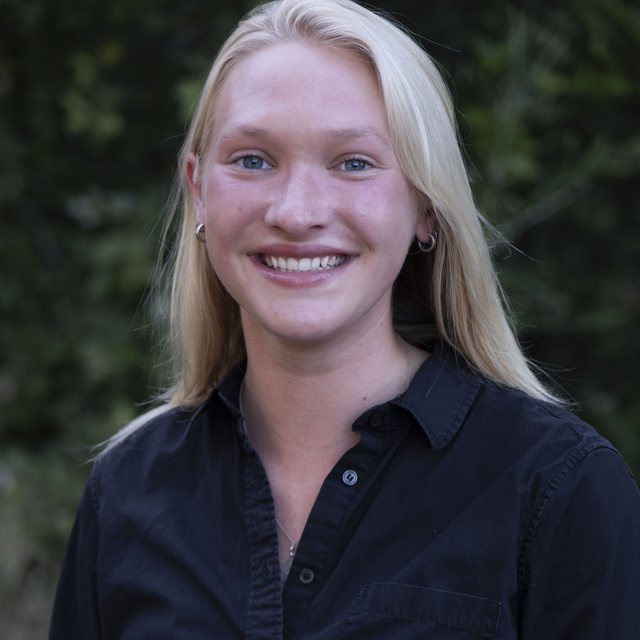
The Design Initiative launched a new program in 2026: Design Fellows are faculty-nominated students who have made design a shared practice across their majors. Fellows spend a three-term year working with faculty fostering Dartmouth’s design community, pursuing an independent study beyond the HCD minor, with the opportunity to exhibit their work.
Claira combines Psychology and Human-Centered Design to understand complex problems and the people behind them. As the head teaching assistant for ENGS 12, she loves being involved with students early on in their HCD journey. She is active in Social Entrepreneurship and Innovation at Dartmouth and co-chairs DartUP. She is endlessly curious about the ways people find joy, connection, and creativity in everyday experiences, from travel and hospitality to analog crafts. Originally from Phoenix, Arizona, she is a longtime peer crisis counselor, avid needlepointer, and regular Studio Yoga & Fitness attendee.
Ellison is a product designer and the education lead at the DALI Lab, an ENGS 12 TA, and a researcher in sociology and design with Professors Kimberly Rogers and Rafe Steinhauer. DALI’s UI/UX miniseries introduced her to design as a first-year; her favorite HCD courses since have been ENGS 15.09 Design Ethics, ENGS 15.07 Research Methods for Human-Centered Design, and ENGS 12 Design Thinking. She cares about keeping people at the center of the work and designing for human connection. She bikes with Dartmouth Triathlon and cooks. From Rochester, NY.
A 2024 TuckLAB Entrepreneurship finalist, Aren and his co-founders developed NEXUS, a startup producing custom-fit 3D-printed footwear; he received the 2024 Magnuson Center Founders Grant and joined the LeapYear ’25 cohort. He is a TA for ENGS 12 Design Thinking and COSC 21 Foundations of Digital Design, and his Design Corps work spans the Dartmouth Libraries and the Dartmouth College Fund. Founder and former vice president of the Dartmouth Organization of Rural Students, he is active with the Magnuson student leadership board, the Hill Wind Alumni Society, and Chi Gamma Epsilon. Weekends: traveling, bartending, or testing the latest AI tools.
“I’ve learned that good design arises from a playful mentality and a deeply personal obsession to solve a problem for someone you can name.”
Devan is curious about how people experience complex systems and how design, storytelling, and entrepreneurship can make those systems more human. That curiosity has taken him to farmers and an alternative-protein startup in Kenya, agricultural supply chains in Peru, jazz communities across Europe, and food and agriculture investing. At Dartmouth he helps lead social entrepreneurship initiatives and likes bringing people together on hard problems. He plays saxophone, golf, and any racquet sport, travels, and is a committed foodie.
“My HCD classes and professors at Dartmouth have taught me to see design in everything. It’s the one thing AI cannot replace, only augment.”
Adeline studies cognitive science with a focus on designing social systems. She has worked with Design Corps and served as a Design Thinking TA. Beyond campus she has been a contract design researcher for Ayble Health and a design intern at Gehl, an urban strategy and design consultancy. She plans a career in design research, applying cognitive science to build social systems that advance social, economic, and climate justice. She believes the best solutions are built with the people they serve, and what excites her most is synthesizing research and communicating it clearly.
Alice’s path bridges quantitative and qualitative thinking: financial markets, genetic-engineering lab work, design research, and community-building for early-stage biotech founders. She is a UI/UX designer at the DALI Lab, a Design Corps member, and a TA for Design Thinking. She grew up in London and studied on Dartmouth’s program in Buenos Aires. She values collaboration, combining perspectives, and questioning assumptions. Outside the classroom: reading, biking, cold-water swimming, the Norwich Farmers’ Market, and collecting vinyl.
“Wear your heart proudly on your sleeve. It helps you find people.”Paul Bennett of IDEO, in her Design Narrative class: the line that stuck.
Stephanie is interested in how the right experience, digital or organizational, shapes how people think, learn, and grow. At the DALI Lab she has been a UI/UX designer and education lead and now leads the student leadership team. She is a Figma Campus Leader, a UX researcher with Design Corps, a TA for ENGS 12 and COSC 25, and has done research on AI adoption in education and human behavior. She wants to see human-centered design shape systems, environments, and everyday experiences beyond digital products, and to help other students discover it.
Delfi studies economics and human-centered design and is interested in the space where finance, design, and culture overlap. Her interests tend to move around, from FX trading and investing to fashion, industrial design, architecture, interiors, and storytelling, but she is especially curious about trends and why people are drawn to certain ideas, products, and aesthetics. She also runs Apolonio.ba, a small clothing brand she started in Argentina and now manages from abroad, which has become a way for her to experiment with branding, design, and consumer behavior. She loves learning by making things and is usually painting, designing, building something with her hands, or falling down a rabbit hole researching a new trend. For her, HCD is a way of connecting all of these seemingly unrelated interests through curiosity about people and the things they create.
This bio is coming soon!
Ashley took ENGS 12 her first fall and went on to TA the course for six terms. Her work sits where design meets software: technology in service of human needs. Her senior thesis used generative agent-based models as a prioritization layer for social-science research, asking whether simulated populations can help researchers decide which questions are worth pursuing. She joins Bank of America as an automation analyst, building systems that make complex processes simpler and more reliable. Off the clock she is usually making something: Lego, painting, baking. From Nashua, NH.
As a student program lead in Design Corps, Meghan led design consulting projects with the Geisel School of Medicine, the Dartmouth College Fund, and the Division of Campus & Community Life. She was a TA for ENGS 12 Design Thinking and ENGS 15.10 Design for Leaders for nine terms and led the ENGS 12 TA team as a senior. She brings design to her role as a strategy consultant in New York.
“HCD: Happy & Creative & Delightful!”
Grace took a wide range of design classes at Dartmouth, which sharpened her eye for close observation and creative problem-solving. She approaches challenges by connecting broad systems to actual human experience, using design principles to reframe complex issues and find what people need. Her coursework taught her to ask critical questions before building a solution. She is starting post-graduate life in San Francisco as an investment analyst in logistics real estate, with biking and photography on the side.
“Taking design classes at Dartmouth has truly been a life-changing experience for me. It’s shifted my perspective on how to tackle challenges and reframe complex ideas.”
At Dartmouth, Emma was part of the DALI Lab and the women’s club volleyball team. She is now based in New York City as a designer at the Walt Disney Company. She likes cooking, traveling, and exploring new restaurants.
“I’ve learned that good design arises from a playful mentality and a deeply personal obsession to solve a problem for someone you can name.”
“My HCD classes and professors at Dartmouth have taught me to see design in everything. It’s the one thing AI cannot replace, only augment.”
“Taking design classes at Dartmouth has truly been a life-changing experience for me. It’s shifted my perspective on how to tackle challenges and reframe complex ideas.”
“Wear your heart proudly on your sleeve. It helps you find people.”
Nominations for the 2027–28 Design Fellows open in spring 2027. Subscribe to the newsletter to learn more.